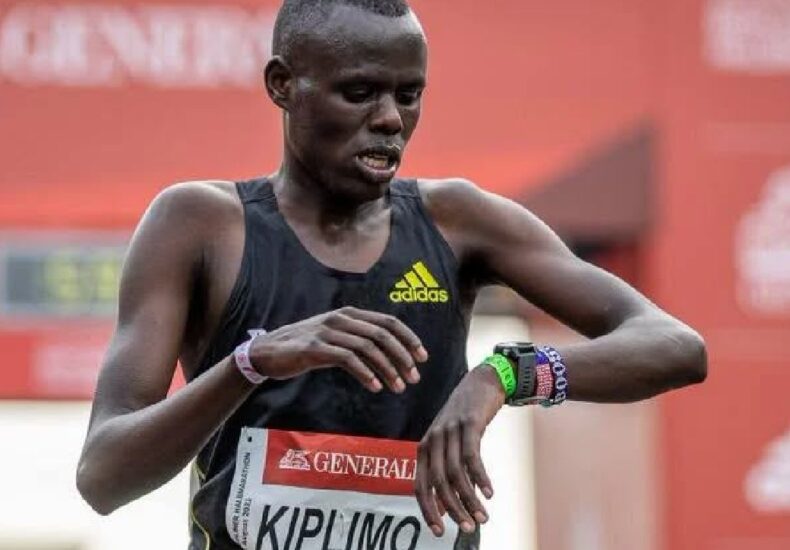
Kenyan marathon runner Philemon Kiplimo Kimaiyo gets two-year doping ban
Kenyan long-distance runner Philemon Kiplimo Kimaiyo has been banned from competing for two years by the Athletics Integrity Unit, effective September 1, 2026.
The athlete attributed his positive test result to taking a medication prescribed to his wife that contained the banned substance chlorthalidone. Chlorthalidone is a diuretic and masking agent. Before being tested in the summer, Philemon Kiplimo Kimaiyo informed the Athletics Integrity Unit about the medication he had taken, and later provided photographic evidence of the drug OLMECURE-CT 40, which contains olmesartan medoxomil and chlorthalidone.
On July 26, the Kenyan finished third in the Bogota Half Marathon in Colombia in a time of 1:03:53, having won the race the previous season. In 2025, Philemon Kiplimo Kimaiyo set a marathon personal best of 2:04:01 in his second-place finish in Hamburg, and came eighth in the Chicago Marathon in 2:06:14. His best times include 58:11 in the half marathon, 27:23 in the 10,000-meter road race, and 27:25.08 in the 10,000-meter track race.
His successes also brought him solid financial rewards – €20,000 from Hamburg, €3,000 for eighth place in Berlin, €7,000 from the Valencia Half Marathon in 2021 and 2022, and a cash prize from Bogota. Since the 27-year-old athlete admitted the charges, his sanction was reduced.
Chlorthalidone and hydrochlorothiazide are thiazide diuretics, which are used to treat high blood pressure and reduce fluid retention in the body. Hydrochlorothiazide was also found in the doping sample of world record holder Ruth Chepng’etich, whose test showed approximately 3,800 ng/ml – a value about 190 times the permissible limit.
Kenya already criminalizes certain practices related to sports doping, but the measures are mainly aimed at service personnel and fraudulent schemes, rather than treating the positive test itself as a crime. The local anti-doping law provides for fines and up to three years in prison for doctors, managers, coaches and other professionals found guilty of aiding or abetting doping schemes. Criminal liability is also incurred for falsifying medical documents during investigations. For its part, the World Anti-Doping Agency (WADA) has traditionally not supported the criminalization of positive tests by athletes themselves, imposing mainly sporting sanctions and suspensions.
Leave a Reply